

Blog
Sustainable Fashion Trends Changing the Industry in 2026

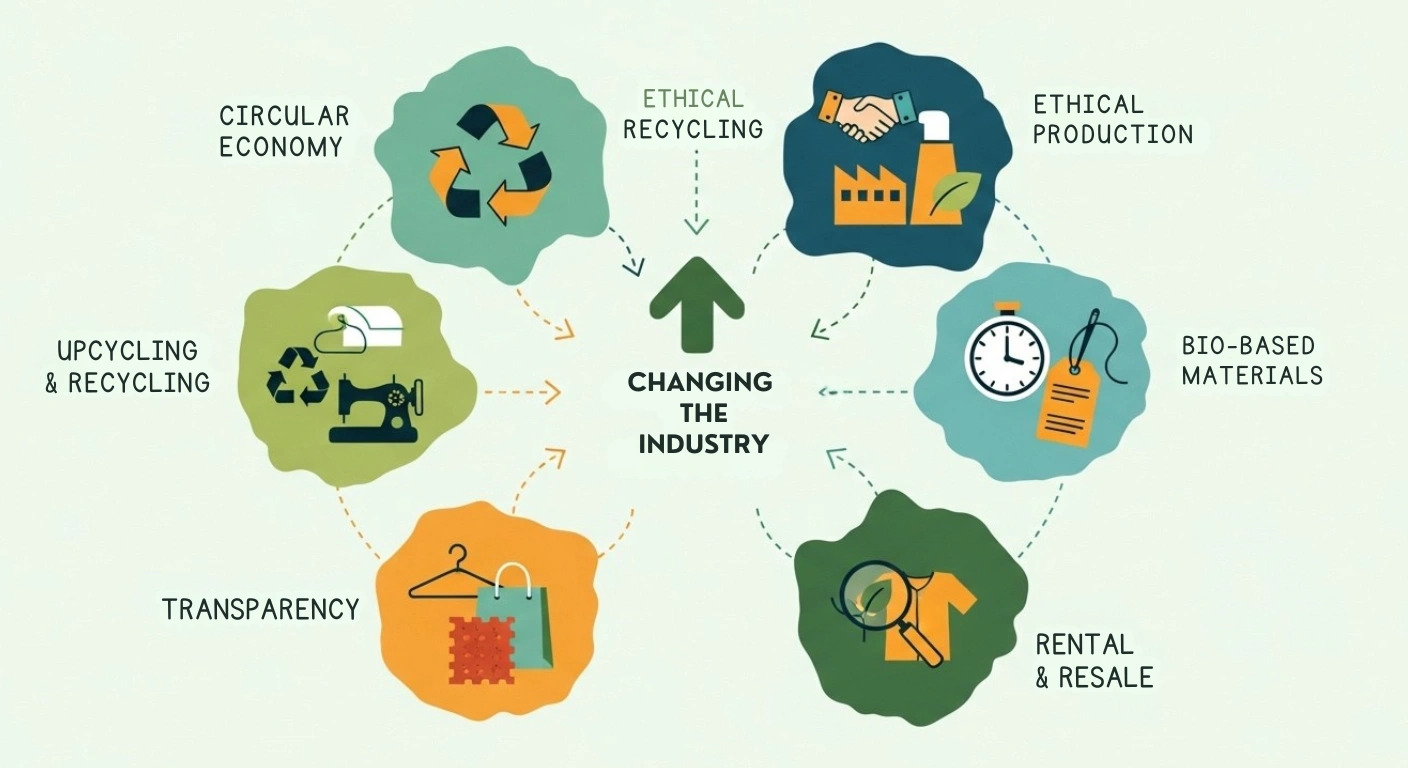
In 2026 Everything Is Different in the World of Fashion. And sustainable fashion trends are changing how clothes get made, sold and worn. The potential impact of the industry’s sprawl on both local communities and global climate change now is getting attention as never before in recent decades.
You have no doubt seen the change taking place all around. Brands are getting in on some circular economy action. The Gen Z customer can’t get enough of vintage finds. New rules from the EU are in the news. The secondhand market is exploding. And stylish materials crafted from mushrooms are actually becoming a thing.
The Secondhand Revolution Has Arrived
Something remarkable has happened recently. Buying used clothing went from being something people did quietly to becoming genuinely cool and desirable.
How Big Is the Resale Market Now?
The global secondhand apparel market is huge right now. It’s expected to increase from about $198 billion in 2025 up to nearly $486 billion by 2031, according to recent industry reports. This is a compound annual growth rate of over 16 percent.
Inflation-based economic pressure has also played a part in this increase. But there’s something deeper going on as well. Americans have truly shifted the way they think of owning and consuming clothing.
Platforms such as Vinted, Depop, ThredUp and Poshmark have evolved from scrappy startups into retail heavyweights. Vinted surpassed France’s largest retail chains in volume in early 2025 after increasing its net profit by over 330 percent. The resell platform actually outpaced traditional retailers in one of fashion’s most important markets.
Why Brands Are Getting Into Resale
Fashion brands themselves, in fact, are now jumping into the resale game. Resale programs led by brands in the United States would be roughly 300 percent larger between 2021 and 2025, by one measure. Arc’teryx and Lululemon are among the major names that now have their own secondhand programs.
Why would brands want to sell their own products twice? Indeed, 43 percent of secondhand buyers will later buy new items from that same brand, research shows. Resale offers an entry point to new customers who can’t yet afford full-price items.
And then there is brand control as well. When a company operates its own resale arm, it can guarantee that items are authentic and well presented. This is better to preserve the branding versus random 3rd party listings.
Circular Fashion Becomes the New Normal
For years, fashion operated on a simple principle: make stuff, sell stuff, throw stuff away, repeat. That linear model is finally breaking down in 2026.
Understand the Circular Economy in Fashion
Circular fashion is designing products with the intent for them to be used for a long time by you or someone else and then recycled instead of thrown away. It calls for a rethinking of everything from design to retail operation.
The Ellen MacArthur Foundation has calculated that circular business models may be worth $700 billion by 2030. This accounts for about 23 percent of the overall fashion market.
Here’s how companies are reacting with specific programs. Worn Wear is the name of Patagonia’s program to repair and resell gently used gear. H&M has opened vintage stores-within-stores. Even luxury houses like Balenciaga have announced official resale programs.
The Rise of Fashion Rental
Ownership itself is becoming optional for many consumers. Fashion rental services allow people to wear designer pieces without the full purchase price or closet space requirements.
This model works particularly well for items worn only once or twice. Rather than buying a $500 dress for one wedding, you can rent it for a fraction of the cost. The trend extends beyond special occasions too, with subscription services letting people rotate through everyday wardrobes.
Revolutionary Materials Are Coming to Your Closet
Perhaps nothing captures sustainable fashion innovation quite like mycelium leather. Yes, we’re talking about mushroom-based fabric, and this isn’t science fiction anymore.
Mycelium Leather Explain
The mycelium is the root-like network on which mushrooms grow. Under optimal growing conditions it creates a soft yet sturdy mass that closely resembles animal leather.
The process uses agricultural waste products such as sawdust as a food source for the mycelium. Under correct humidity and temperature, the fungus grows for weeks. The sheet that emerges is harvested and processed into a leather-equivalent.
Conventional animal leather needs you to raise cows meaning all the land use, water usage, and methane thats released. Faux leather uses plastic derived from petroleum. Mycelium leather requires none of that.
Companies such as MycoWorks and Bolt Threads have also teamed up with major luxury brands, like Hermès and Stella McCartney. The technology is scaling up, but remains at a point where costs are higher than traditional leather.
Other Bio-Based Innovations
The sustainable materials revolution includes many exciting developments beyond mushroom leather.
Key bio-based material innovations in 2026:
- Cactus leather requiring dramatically less water than animal or synthetic alternatives
- Tencel made from sustainably harvested wood pulp in closed-loop processes
- Algae-based textiles offering biodegradable alternatives to synthetics
- Apple skin waste transformed into leather-like materials
- Lab-grown silk using recombinant technology
- Recycled polyester giving new life to plastic waste
New Laws Are Forcing Change
2026 marks a watershed moment for fashion regulation. The European Union is implementing some of the most ambitious rules ever applied to the clothing industry.
The EU’s Ban on Destroying Unsold Clothing
Starting in July 2026 for large enterprises, the EU will prohibit brands from destroying unsold clothing and footwear. No more incinerating perfectly good products or burying them in landfills.
This rule targets one of fashion’s dirtiest secrets. For years, major brands destroyed millions of dollars worth of unsold inventory to protect brand image. Burning new clothes seemed preferable to letting them appear at discount retailers.
Under the new rules, large companies must report how much unsold merchandise they generate. Transparency requirements mean consumers can scrutinize waste practices closely.
Digital Product Passports Are Coming
The Ecodesign for Sustainable Products Regulation introduces Digital Product Passports. Starting in July 2026, fashion products sold in the EU need digital identities containing detailed information about composition, environmental impact, and origins.
Think of it like a nutrition label for clothing. Scan a QR code and see where cotton was grown, what dyes were used, and how to recycle the garment properly. For brands, this means unprecedented supply chain transparency.
France’s Eco-Score System
France is pushing further with mandatory environmental impact labeling. Starting mid-2026, many clothing items must display an eco-score indicating their environmental footprint.
The scoring considers factors throughout a product’s lifecycle: raw materials, manufacturing, transportation, durability, and disposal options. If France’s experiment succeeds, other EU countries may adopt similar systems.
Greenwashing Gets Cracked Down
From September 2026, EU rules prohibit generic environmental claims like “eco-friendly” unless backed by recognized standards. Carbon neutral claims based solely on offsetting will face restrictions.
Specific greenwashing practices being banned:
- Vague claims like “sustainable” without supporting evidence
- Generic terms like “eco-friendly” without certification
- Carbon neutral claims based only on offsetting
- Marketing basic legal compliance as special sustainability features
- Sustainability labels without proper verification
Gen Z Is Driving the Transformation
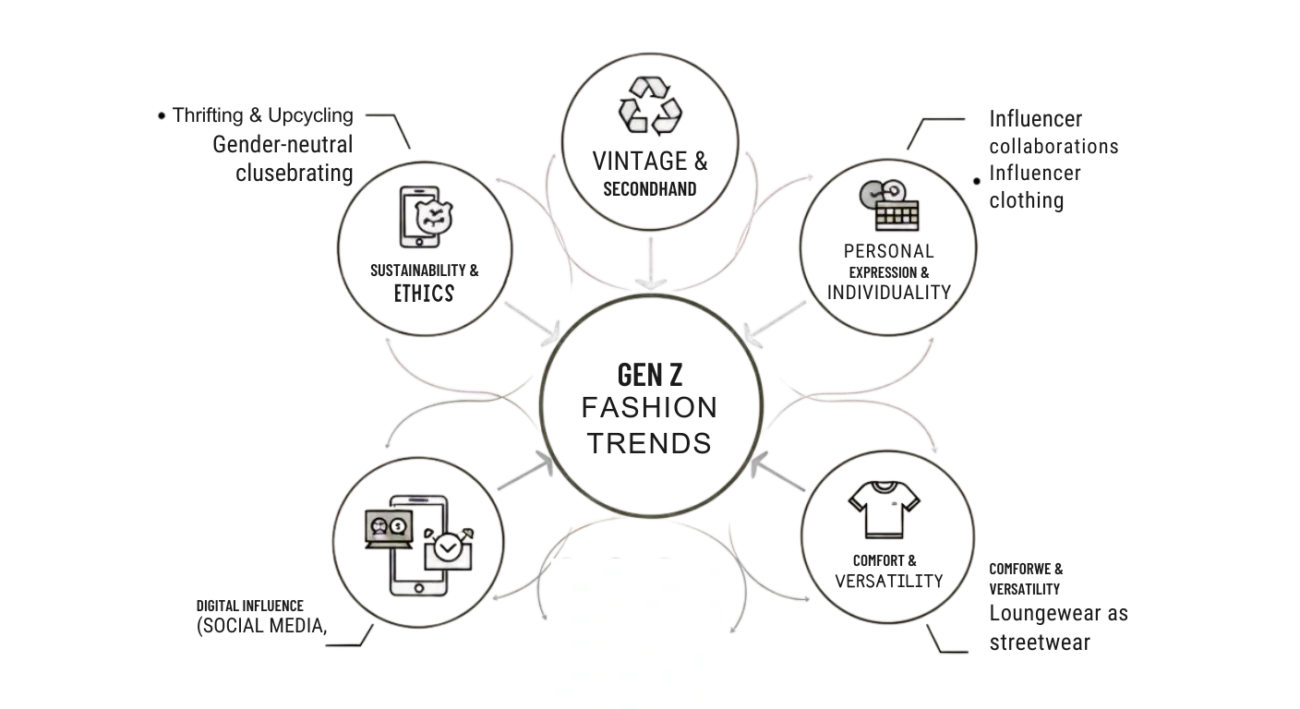
If you want to understand where fashion is heading, watch what young people are doing. Generation Z consumers aren’t just participating in sustainable fashion; they’re largely responsible for creating it.
The Numbers Don’t Lie
And study after study demonstrates that Gen Z is the front runner on sustainable consumption. Some 62 percent look for secondhand alternatives before they purchase new. About 75 percent of them are willing to pay a premium for products that are sustainable. And 47 percent will not purchase anything that is not from a sustainable brand.
Most important, perhaps, Gen Z has made thrifting seem normal. Older consumers thought of secondhand shopping as what you do when you’re tight on money, and younger shoppers think it’s actually desirable. Vintage finds carry social currency.
And with ad spend projected to be in the $400 billion range worldwide, brands can’t ignore those preferences. Consumers from Gen Z and Gen Alpha are projected to make up 40 percent of the US fashion market within the next 10 years.
Style as Self-Expression
Gen Z favors maximalism over quiet luxury. They want bold colors, mixed patterns, vintage pieces with character, and outfits that tell stories. This actually supports sustainable consumption.
When clothes express individual identity rather than copy influencer trends, pressure to constantly buy new things diminishes. Unique vintage finds serve maximalist aesthetics better than generic fast fashion anyway.
Key Gen Z sustainable fashion behaviors:
- 62% look for secondhand items before buying new
- 75% willing to pay more for sustainable products
- 58% care about clothing’s carbon footprint
- 90% have made lifestyle changes for sustainable fashion
- 47% refuse to buy from non-sustainable brands
- 40% resell clothes to fund new purchases
What This All Means for You
The sustainable fashion landscape in 2026 offers more options than ever, but also more complexity. Here’s how to navigate it practically.
Practical Steps You Can Take
Begin with what you already have. The most sustainable garment is the one already hanging in your closet. Knowing how to make a few repairs as well as some maintenance ensures that the life of your clothes will last much longer.
“Whenever you actually have a need for something, think secondhand first. Platforms have become sophisticated enough that the search for specific items in decent shape is actually possible.
Seek out brands with specific sustainability promises and certifications. Vague claims should raise skepticism. Detailed details on components and manufacturing show effort in the right direction.
Consider cost-per-wear rather than sticker price. A $150 jacket worn 100 times costs less per wearing than a $30 jacket falling apart after 10 washes.
Practical sustainable shopping checklist:
- Audit your current wardrobe before buying anything new
- Check secondhand platforms for items you need
- Research brand sustainability practices and certifications
- Calculate cost-per-wear for quality investment pieces
- Learn basic mending and garment care techniques
- Donate or resell items you no longer wear
- Support local tailors for alterations and repairs
The Honest Reality Check
Sustainable fashion in 2026 still isn’t perfect. Fast fashion continues growing with ultra-cheap prices. Many ethical brands struggle to compete. A gap persists between consumers’ stated values and actual purchasing behavior.
Regulations helping transform Europe don’t apply everywhere. Greenwashing persists despite crackdowns. Innovative materials remain expensive and limited. Progress is real but incomplete.
FAQs
What exactly is sustainable fashion?
Sustainable fashion encompasses practices minimizing environmental impact and prioritizing social responsibility throughout clothing’s entire lifecycle. This includes eco-friendly materials, ethical manufacturing, durability design, waste reduction, and fair labor conditions. It’s about creating a fashion system working within planetary boundaries.
Is secondhand shopping really better for the environment?
Generally yes, with caveats. Buying secondhand keeps existing clothes circulating longer, reducing demand for new production. However, some heavy secondhand shoppers consume more overall because they view thrifting as guilt-free. The benefit depends on whether secondhand purchases replace rather than supplement new purchases.
What are the most sustainable fabrics in 2026?
Organic cotton, hemp, linen, and Tencel rank among the most sustainable conventional fabrics. They’re natural, biodegradable, and can be produced with lower environmental impact. Recycled materials including recycled polyester also perform well. Emerging bio-based materials like mycelium leather show great promise.
How can I tell if a brand is genuinely sustainable or greenwashing?
Look for specificity and transparency. Genuine efforts include detailed material information, named factories, recognized certifications, concrete targets with progress reports, and acknowledgment of challenges. Vague claims like “eco-conscious” without details should raise skepticism.
Will sustainable fashion become affordable?
Prices are gradually coming down as sustainable practices scale up. The secondhand market offers affordable options right now. Fast fashion’s low prices don’t reflect true environmental and social costs. Industry experts expect sustainable options to become more accessible over time.
What happens to clothing after recycling?
Current textile recycling remains limited. Most “recycled” clothing gets downcycled into lower-value products like insulation rather than new clothing. True fiber-to-fiber recycling handles only a small fraction of waste. Investment in recycling infrastructure is increasing with companies developing better technologies.
Final Thought
In the sustainable fashion trends of 2026, it proves that where consumer demand, brand innovation, and regulatory pressure converge real change can happen. The secondhand market is booming, circular business models are starting to scale and revolutionary materials are going mainstream, all while strict new laws hold companies responsible. Although challenges remain and consumers are still lured by the siren call of cheap fast fashion, the path is at least clear. The fashion of the future will be more sustainable, more transparent and more circular than its past. The clothes you wear tell a story about your values, so make it one worth sharing. Every purchasing decision is a vote for the kind of industry you want to thrive.